


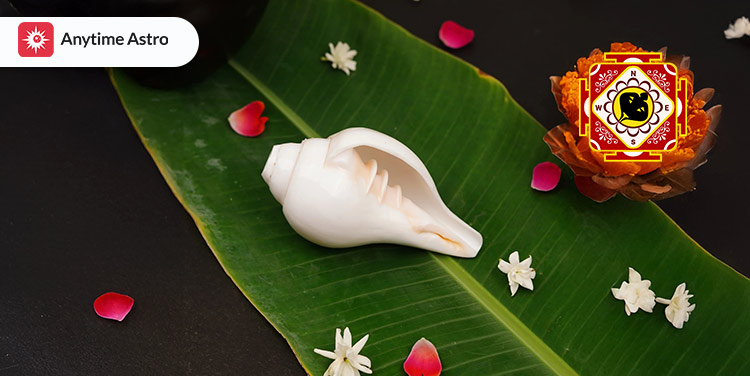
A relaxing aroma spread in the surroundings by the sound of Shankh or a conch shell when played. Do you know these Shankhs are also an element known to cleanse the Vastu doshas and invite positivity to the home? In Vastu, different types of Shankh are known to fetch blessings such as plentitude, happiness, peace, or wealth. For which, it is crucial to adhere to the Shankh Vastu tips while installing the sacred elements at home.
The term Shankh is a combination of ‘Shum’ meaning great and ‘Kham’ indicating water, conveying the divine essence held within an individual. As these are sacred elements, they should be kept in the home temple with due respect and care. Shankhs are known to contain holy waters that, when blown, purify the environment. In Hindu mythology, Shankh is called a symbol of life force and is one of the five worship elements, depicting air and vibrancy. In this blog, we shall learn about the various types of Shankh and Vastu tips for placing the Shankh at home. So, let us begin!
Know About: Vastu Tips for Hanging Bells
Types of Shankh as per Vastu
Different types of Shankhs are related to specific purposes as well as deities, according to Hindu Mythology. Let us learn about some of the recognized types of Shankhs:
Ganesha Shankh
This type of Shankh is ideal for the home temple and can be worshiped daily or at festivals. If not used regularly, store the Shankh in a locker and cover it with a red cloth. The Ganesha Shankh represents Lord Ganesha and is known to eliminate hindrances and invite success, prosperity, and wisdom.
Moti Shankh
It is a Shankh with a pearl-like shine and believed to attract success, wealth, and peace. It is treasured for its beauty and said to bring good fortune when set at home.
Heera Shankh
Heera Shankh, also known as the Pahadi Shankh, is associated with Lord Vishnu and Goddess Lakshmi. It is a right-handed Shankh that brings prosperity and protection to the home.
Gaumukhi Shankh (Cow Conch)
Another type of Shankh is the Gaumukhi Shankh, also known as Panchmukhi Shankh. It endows individuals with blessings and prosperity, just as having a cow at home indicating plentitude and joy.
Kauri Shankh
The Kauri Shankh is too auspicious and related to Goddess Lakshmi. It is known to fetch wealth and abundance. This Shankh holds historical significance as once it was used as currency and even a piece of the bride’s attire.
Vamavarti Shankh
Vamavarti Shankh is a left-handed Shankh widely utilized in religious rituals. Blowing this Shankh purifies the surroundings and eliminates negativity. This Shankh is known to deliver the blessings of Goddess Lakshmi and Lord Vishnu.
Dakshinavarti Shankh (Lakshmi Shankh)
The Dakshinavarti Shankh is a right-sided Shankh and said to be a home to the deity Kuber. It can be kept in the puja room to attract prosperity. The Shankh Vastu tips urge decorating it with a swastika and worshiping it using lamps, sandalwood, and flowers for maximum benefit.
Gomati Chakra
Gomati Chakra is a shell that resembles the Sudarshan Chakra of Lord Krishna and is set in the foundation of buildings to eliminate Vastu doshas. It is usually worshiped during the Diwali festival with Goddess Lakshmi to fetch wealth and longevity.
Direction of Shankh in Pooja room
One can attain the positive effects and blessings of Shankh by placing it in the east or northeast direction. It can be purified with water, followed by Ganga jal, and positioned on a clean platform. Set it in a way that the pointed end faces the interior of the puja room, denoting the energy flow. Cleanse it regularly with water and chant mantras related to it to preserve its energy and sanctity. Placing Shankh in an appropriate direction in the Pooja room radiates positive vibrations, contributing to a peaceful and harmonious atmosphere.
Know About: Snake Plant Vastu
Benefits of Keeping Shankh at Home
As per Vastu Shastra, Shankh is known to present with the following benefits -
- Attracts Prosperity: Installing the Shankh at home on auspicious days brings success and prosperity.
- Repulses Negative Energy: The Vastu tips for Shankh mention these tools help draw positivity and harmony and repel negative influences.
- Wisdom & Growth: As Shankh helps invoke Goddess Saraswati, setting up this tool helps enrich wisdom and growth.
- Relationship Harmony: Having a Shankh in the bedroom helps intensify the connection among partners, enhancing marital harmony.
Know About: Vastu Pyramids
Shankh Vastu tips: Dos and Don’ts
Do's:
- Use holy, clean water to purify the Shankh.
- Use a white or red cloth to cover the Shankh in the puja room.
- Blow the Shankh twice every day to eliminate negativity.
- The unused Shankh should be placed in a clean, elevated place.
Don’ts:
- Do not place the Shankh on the ground and treat it as a deity.
- Do not use Shankh to offer water to Lord Shiva.
- Avoid keeping broken Shankh at home.
- Refrain from using thorny or coral Shankhs, as they can obstruct positive energy.
Know About: Vastu for Study Table
Frequently Asked Questions
Q.1 What do the different types of Shankh represent?
Ans. Each type of Shankh is related to a deity and holds a certain significance; for example, Kauri Shankh brings wealth and plentitude, and Ganesha Shankh denotes wisdom.
Q.2 As per the Vastu tips for Shankh, how should I place it in the Puja Room?
Ans. The Shankh Vastu tips recommend placing it in the east or northeast in an elevated and clean area, cleansed regularly.
Q.3 Can I keep the Shankh in the bedroom?
Ans. Yes, the Shankh Vastu tips mention keeping it in the bedroom to foster harmony between partners and strengthen their relationship.
Q.4 Mention the benefits of Gomati Chakra.
Ans. Gomati Chakra helps remove Vastu dosha and blesses the natives with wealth, longevity, and prosperity when buried in the foundation of the building.
Q.5 Should I replace the Shankh if it breaks?
Ans. The broken Shankhs should be replaced as they might attract negative energy.
Q.6 How can I clean and preserve the Shankh?
Ans. As per Shankh Vastu, you should clean it daily with holy water, cover it with a cloth, and set it on a clean platform to maintain purity and sanctity.





Leave a Comment