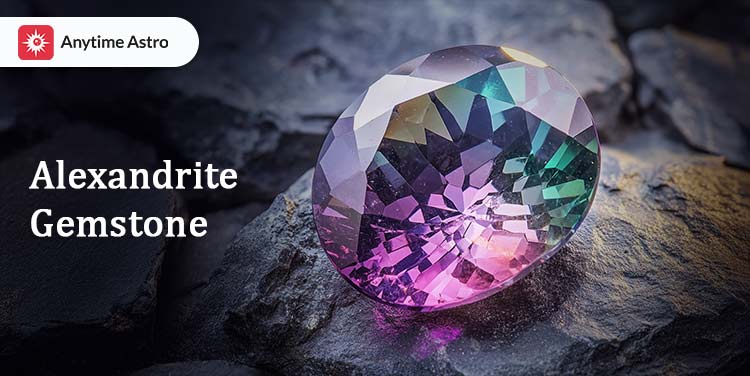


Gemstones are exceptionally exquisite stones treasured by many. They not only adorn your jewelry pieces, but also carry favorable energies and benefits. One of the rare, magnificent gemstones is the alexandrite, known for its unique ability to change colors, described as 'emerald by day, ruby by night.' The dramatic, transformative quality of this gemstone attracts many jewelers, collectors, historians, and spiritual seekers. However, apart from its eye-catching beauty lies a profound meaning linked to emotional balance, intuition, transformation, and inner harmony. In this blog, we will learn about the formation, significance, history, energetic and physical properties, symbolism, uses, and caring tips of alexandrite stone. So, let us begin.
Alexandrite Gemstones: Formation & Occurrence
Alexandrite gems are rare, valuable chrysoberyls formed under specific geological conditions. It originates in areas where metamorphic and pegmatitic processes surface, enabling chromium and beryllium to come together, resulting in a color change. It can be found in alluvial and primary deposits, with major sources in the Russian Ural Mountains, Sri Lanka, Brazil, and India.
Chromium plays a key role in the signature color-changing effect of alexandrite. This trace component substitutes for aluminum in the crystal structure, giving the alexandrite gemstone its exceptional optical properties. The orthorhombic crystal system is a remarkable composition that can bend and reflect light differently in different lighting conditions.

Alexandrite Gemstones: History
The story of alexandrite dates back to the Ural Mountains of Russia in the early 1830s. When miners discovered this stone at first, they believed they had uncovered a new type of emerald as it held a brilliant green appearance in daylight. But when the gem turned into a deep red or purplish shade in the evening, everyone was amazed. This rare and magical transformation was unlike anything previously seen in the mineral world.
As the timing of its discovery aligned with the birthday of Tsar Alexander II, the gemstone was named alexandrite to honor the future ruler. With its patriotic green-and-red shades, coincidentally the colors of the old Imperial Russian military, it soon became a favorite among the Russian nobility. Nobles and aristocrats regarded it as a mark of courage, good fortune, and imperial prestige.
The upsurge in popularity of this June birthstone occurred until the Russian Revolution, when political unrest and restricted mining made the stone exceedingly rare, increasing its appeal. While new deposits have been found in Brazil, Sri Lanka, East Africa, and India, none of them can match the intensity and dramatic color shift of the original Russian alexandrite stone, making those early specimens the most valuable in the world.
In the late 19th and early 20th centuries, scientists flourished, creating lab-grown alexandrite, but these natural stones are among the rarest gemstones on Earth (even more rare than diamonds). It adds emotional and symbolic profundity, strengthening the association of this gemstone with resilience, adaptability, and transformation.
Alexandrite Gemstones: Physical Properties
The alexandrite gemstone belongs to the chrysoberyl family, a beryllium aluminum oxide mineral that has traces of chromium. It is this chromium that produces its exceptional color-shifting phenomenon. Let us understand how these alexandrite properties further shape it.
Exceptional Hardness & Durability
The alexandrite stone has a hardness of 8.5 on the Mohs scale, making it one of the toughest gemstones and ideal for daily wear in rings, pendants, or bracelets.
Color Changing Properties
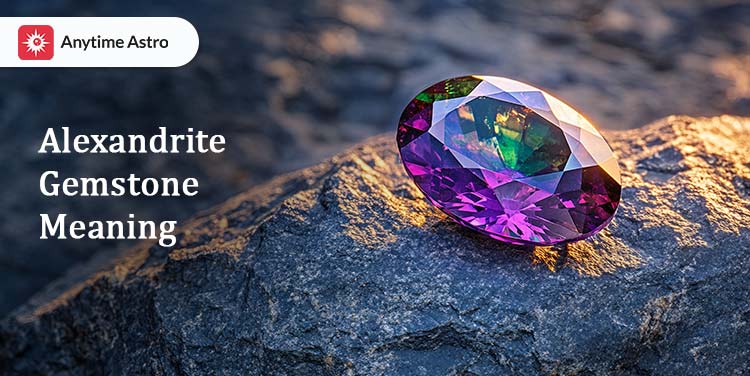
One of the distinctive characteristics is the alexandrite effect, a rare form of metamerism that occurs due to chromium ions that absorb different wavelengths of light differently. In day or fluorescent lights, the alexandrite gem appears blue-green, green, or teal. Whereas under warm or incandescent light, it turns red, purple-red, or raspberry. A high-quality alexandrite gem exhibits a 100% color transformation; others display a 50-80% change. This particular characteristic of the gem can attract gemologists from all around the world.
Pleochroism & Crystal Structure
Alexandrite furthermore displays strong pleochroism, showing different colors from different angles. Moreover, its orthorhombic crystal structure presents it with depth and brilliance.
As this gemstone is available rarely and priced at a high value, it is recommended to purchase it from a trusted source with a certificate from reputed laboratories, such as GIA or IGI. You may also engage in a free chat with astrologers before wearing this extraordinary gem.
Symbolic, Spiritual, & Metaphysical Meanings of Alexandrite Gems
We have learned about the alexandrite properties above; now, let's understand its profound spiritual and symbolic significance.
1. A Symbol of Transformation
The shift in color from green to red in alexandrite stone symbolizes evolution, life changes, adaptability, and the embrace of duality. This gemstone is said to guide you through transitions, helping you stay balanced as you navigate spiritual, emotional, or professional shifts.
2. Emotional Balance & Harmony
The primary colors of this stone, green and red, represent different emotional energies of alexandrite. Green associates with the heart chakra and is known for its harmony and healing properties, whereas red marks courage, vitality, and passion. These colors can together promote self-confidence, emotional clarity, and inner peace.
3. Enhancing Intuition & Creativity
The alexandrite birthstone meaning in metaphysical practices is known to enhance intuition, awareness, creativity, and genuine self-expression. Wearing this gem can uplift the spirit, invite happiness, and encourage one to align with their higher purpose.
4. Astrological Significance
In astrology, the alexandrite significance is connected with Gemini, Scorpio, and Cancer. Geminis can wear it to enhance clarity and emotional grounding. Scorpios can expect spiritual awakening and transformation after wearing it. For Cancerians, the alexandrite properties act as a protective shield, bringing them love and luck. Further, this is a gemstone for the 55th wedding anniversary, symbolizing longevity, revived commitment, and the capability to grow together over time.
5. Mythology & Cultural Symbolism
Russian texts mention that alexandrite was once called "widow's stone" for its reddish color, indicating mourning during wartime. However, its meaning shifted gradually to represent resilience, hope, and spiritual rebirth.
Alexandrite Gemstones in Jewelry
The dramatic alexandrite characteristics make it an exquisite centerpiece in fine jewelry. The property of alexandrite to change color can create a vibrant, transformative beauty, ensuring that the wearer experiences new things. The deep alexandrite birthstone meaning makes it a treasured engagement ring, symbolizing emotional balance and love. It can even serve as one of the best anniversary gifts, representing transformation and longevity. These have secured a place even in modern designer jewelry pieces, highlighting their rare and color-changing brilliance. You can pair the Alexandrite gemstone with white gold, diamond, yellow gold, platinum, and even rose gold.
Value & Pricing
Natural alexandrite stones can range from a few thousand to around $50,000 per carat, depending on their clarity, carat weight, origin, and color-changing intensity. Russian gems hold the highest prices for their dramatic shifts. However, if someone wishes to buy one at affordable rates, they may consider a lab-grown alexandrite. These stones may have color-changing properties, but you may have to compromise on their metaphysical and historical resonance.
Modern Uses Beyond Jewelry
Alexandrite birthstone possesses optical qualities that can expand its usefulness in medical devices, tunable lasers, and scientific research. However, the alexandrite spiritual meaning is about personal growth, emotional upliftment, and balance.
How to Care for Alexandrite Gemstone?
You should care for the alexandrite gem properly to retain its energy and beauty. Below are the cleaning tips:
- Use lukewarm water with mild soap.
- Gently brush utilizing a soft-bristled toothbrush.
- Rinse thoroughly and pat dry using a soft cloth.
Do not use ultrasonic, steam cleaners, high heat, or strong chemicals to clean these gems, as they may damage settings or internal energies. Also, do not keep alexandrite stones with hard gems or diamonds. Ensure you put it in a soft pouch or fabric-lined box.
Individuals using alexandrite for spiritual purposes can cleanse it by moonlight, incense/sage smoke, or intention-based meditation. Energetic cleansing can help restore the vibrational purity and enhance its healing qualities.
Alexandrite Gemstones: Quick Summary
Here is a quick recap of alexandrite’s mineral properties:
- Mohs hardness: 8.5
- Crystal structure: Orthorhombic
- Luster: Vitreous (glassy)
- Transparency: Transparent to opaque
- Color: Color may vary in different light sources, presenting stone blue-green, green, greenish-blue, yellow-green, or bluish-gray shades in daylight or fluorescent light. In incandescent or candlelight, it may turn red, raspberry red, reddish-purple, purplish-red, mauve, violet, grayish-purple, or brownish-red.
- Refractive index: 1.745-1.759
- Density: 3.68-3.80
- Cleavage: Distinct/good to poor on {110}
- Fracture: Conchoidal or uneven/irregular
- Streak: White
- Luminescence: Fluorescence present - weak red in SW-UV & LW-UV
- Pleochroism: Present & strong; It can be green, yellow-orange (or orange), and red (or purplish-red)
- Birefringence: 0.008-0.010
- Dispersion: 0.015
- Optical effects: Color-change; Very rarely chatoyancy or asterism
Wrapping Up
Alexandrite is one of the rarest gemstones on Earth, treasured for its remarkable color-changing ability. The dual shades symbolize adaptability, transformation, and emotional balance. The alexandrite gem is associated with Russian royalty and thus symbol of power, prestige, and resilience. The Alexandrite spiritual meaning is associated with creativity, intuition, happiness, and personal growth, and even carries a deep cultural and sentimental value. Associated with the heart chakra, it is known to promote clarity and harmony. Overall, alexandrite remains a gemstone of magic, mystery, and deep symbolism, making it ideal for anyone seeking beauty with deeper meaning.

Frequently Asked Questions
Q.1 Is alexandrite an expensive stone?
Ans. Yes. The unique properties of the alexandrite stone to change colors and its rare availability make it one of the most expensive and rarest stones.
Q.2 What is alexandrite stone good for?
Ans. The alexandrite gemstone is believed to enhance instinct, boost confidence, balance emotions, and attract good fortune by balancing the energies of mind and heart.
Q.3 Is alexandrite found in India?
Ans. Yes. Alexandrite gemstone deposits are also found in India, mainly in the states of Andhra Pradesh and Odisha.
Q.4 Who should not wear alexandrite?
Ans. Individuals with a weak Mercury or Venus in their birth chart, or those who are emotionally unstable, should avoid wearing alexandrite without astrological guidance.
Q.5 For which zodiacs is the alexandrite stone favorable?
Ans. Alexandrite gemstones work best for the zodiac signs Gemini, Scorpio, and Cancer.





Leave a Comment