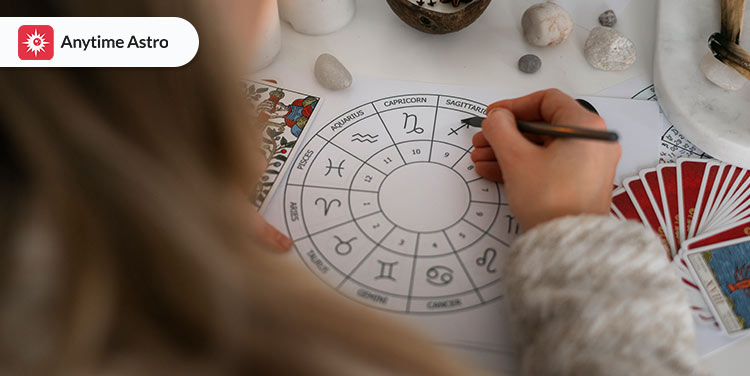


Astrology has been helping us for a long time, with its ability to offer insights into personality, relationships, and life’s path. An astrology chart, or natal chart, is a visual representation of the positions of the planets and stars at the exact moment of your birth. But how do you read an astrology chart, and what does it really mean?
If you are new to astrology and have ever wondered about how to decode your astrology chart, you are in the right place. In this blog, we will take a look at how to read an astrology chart, explain key components, and offer tips to help you understand your own chart or any other.
What is a Vedic Astrology Chart?
A Vedic astrology chart, also known as a kundli or horoscope, is a vital aspect of Vedic astrology. It is a diagram created based on the exact date, time, and place of your birth. Many websites even offer a free astrology chart to help you get a glimpse of your life path. It holds a deep understanding of your future, revealing both your challenges and opportunities. Astrologers use the kundali to guide you through life's obstacles, suggesting remedies and solutions. One of the primary purposes of creating a kundali is marriage matching, a crucial step in many cultures. The Kundali can reveal how partners will interact, predict the level of understanding between them, and highlight any possible issues that could arise in their relationship.
Now that we have understood a little about my astrology chart. Let us decode the kundali and learn how to read an astrology chart.
How to Read an Astrology Chart
As you know, an astrology chart is a map of the sky at the exact moment of your birth. It shows the positions of the Sun, Moon, and planets, and it reflects how these celestial bodies influence your life and personality. To create a free astrology chart, your birth details are required. Each planet, sign, and house in your chart has a specific meaning and significance.
The chart is divided into 12 sections, known as houses, and each house represents a different aspect of your life. By reading the planets' positions within these houses and their relationship to each other, you can gain valuable insights into your character, your challenges, and your future potential.
Start with Your Rising Sign
The Rising Sign, also known as the Ascendant, is one of the most important elements in your Vedic astrology chart or kundli. It represents the zodiac sign that was rising on the eastern horizon at the exact moment of your birth.
In your kundli, the first step to understanding the chart is to identify the Ascendant, which sets the foundation for your full astrology chart and influences your outward behavior. In the chart, zodiac signs are shown as numbers, planets are marked with astrology symbols or abbreviations (like Ra for Rahu), and houses may be shown in Roman numerals or regular numbers( depending on the person creating the chart).
However, there is much more to an astrology chart than just your rising sign. To truly understand your free astrology chart, you need to consider all the other planets, signs, and houses.
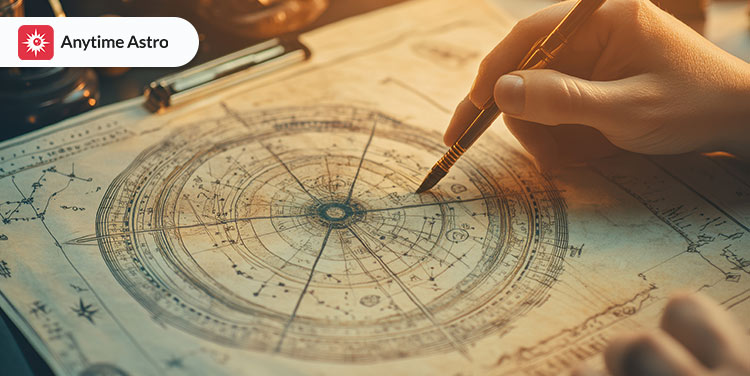
Understanding the Planets in Your Astrology Chart
The planets in your astrology chart represent different parts of your life. Each planet has a unique influence, and where they are placed in your chart helps define various aspects of your personality, emotions, and life experiences. Here are some key planets and their meanings:
- Sun (Su) - Represents your core essence, vitality, and identity.
- Moon (Mo) - Controls your emotions, instincts, and inner self.
- Mercury (Me) - Represents communication, intellect, and reasoning.
- Venus (Ve) - Governs love, relationships, and beauty.
- Mars (Ma) - Represents energy, action, and ambition.
- Jupiter (Ju) - Governs luck, growth, and expansion.
- Saturn (Sa) - Symbolizes discipline, challenges, and life lessons.
- Rahu (Ra) - Represents ambition, desires, foreign connections, and sudden changes.
- Ketu (Ke) - Signifies detachment, spirituality, past life karma, intuition, and hidden knowledge.
- Uranus - Symbolizes change, innovation, and rebellion.
- Neptune - Governs dreams, spirituality, and intuition.
- Pluto - Symbolizes transformation, power, and deep inner change.
Each planet will be in one of the 12 zodiac signs, and its placement will influence how its energy is expressed in your life.
Explore the 12 Houses
An astrology chart is divided into 12 houses, each of which governs a different aspect of your life. These houses show where different areas of your life are influenced by the planets. The houses are numbered I-XII(this may vary depending on the person creating the Vedic astrology chart), and here’s what they represent:
- First House - Self, appearance, personality
- Second House - Wealth, values, possessions
- Third House - Communication, siblings, learning
- Fourth House - Home, family, emotions
- Fifth House - Creativity, love, children
- Sixth House - Health, work, daily routines
- Seventh House - Marriage, partnerships, relationships
- Eighth House - Transformation, shared resources, death
- Ninth House - Philosophy, higher education, travel
- Tenth House - Career, social status, reputation
- Eleventh House - Friends, hopes, dreams, social networks
- Twelfth House - Secrets, spirituality, subconscious
By looking at the planets in these houses, you can gain insights into different aspects of your life, from your career and finances to your relationships and inner thoughts.
Learn About the Zodiac Signs and Their Influence
The 12 zodiac signs are essential to understanding how your planets behave in your astrology chart. They are shown by numbers (e.g., 1 for Aries, 2 for Taurus, and so on). Each sign has distinct qualities, and when a planet is in a particular sign, it takes on the traits of that sign. Here’s a quick rundown of each sign’s general qualities:
- Aries - Assertive, energetic, adventurous
- Taurus - Practical, reliable, sensual
- Gemini - Curious, communicative, adaptable
- Cancer - Nurturing, emotional, intuitive
- Leo - Creative, confident, passionate
- Virgo - Practical, analytical, detail-oriented
- Libra - Balanced, diplomatic, charming
- Scorpio - Intense, passionate, transformative
- Sagittarius - Optimistic, adventurous, philosophical
- Capricorn - Ambitious, disciplined, practical
- Aquarius - Innovative, intellectual, rebellious
- Pisces - Compassionate, artistic, dreamy
Each planet in your chart will be placed in one of these signs, and this will affect how its energy is expressed.
Understand the Aspects Between Planets
Aspects are the angles between celestial bodies in your free astrology chart, and they represent how the planets interact with each other. The main aspects you will encounter are:
- Conjunction (0°) - Planets are aligned and their energies blend.
- Square (90°) - Tension and conflict between planets.
- Trine (120°) - Harmony and flow between planets.
- Opposition (180°) - Challenges and opposing forces.
Aspects help you understand how different parts of your life interact and can show where you may experience challenges or where you have natural strengths.
Use an Astrology Chart Calculator
If you are not yet comfortable with reading an astrology chart manually, you can make things easier by using an astrology chart calculator. These online tools let you input your birth date, time, and place, and they will generate your personalized full astrology chart.
A free astrology chart calculator will provide you with a detailed map of your planets, signs, and houses, making it easier to begin learning about your chart. Once you have your chart, you can start decoding its different elements and see how each planet and house influences you.
Analyze Your Chart for Key Insights
Once you have all the pieces of your chart, it is time to start analyzing my astrology chart. Look at the following areas carefully when you begin to read an astrology chart:
- Personal Traits - Your Sun sign, Moon sign, and Ascendant will give you a good understanding of your core personality, emotions, and how you are seen by others.
- Career and Finances - Examine the Tenth House (career) and Second House (finances) for insights into your professional life and wealth.
- Relationships - The Seventh House governs marriage and partnerships, while Venus and Mars show how you relate to others in love.
- Health and Well-being - The Sixth House gives insight into your health, work habits, and daily routines.
If you ever feel stuck or unsure while trying to read an astrology chart, you can always consult a professional astrologer for deeper clarity and guidance.
Conclusion
Learning to read an astrology chart may seem overwhelming at first, but with some practice, it becomes an engaging and insightful way to understand yourself and the world around you. Take your time and start with the basics. Use tools like an astrology chart calculator to make the process easier, and go deeper into your full astrology chart for more nuanced understandings.
As you begin to decode my astrology chart, you will uncover layers of meaning that will guide you on your journey of self-awareness and growth.
FAQs
Q.1 How to read a chart in astrology?
Ans. Start by identifying your rising sign, then analyze the planets, signs, and houses for insights into different areas of life.
Q.2 How to find house in astrology chart?
Ans. In an astrology chart, planets are marked with astrology symbols or abbreviations. For example, Su for Sun, Mo for Moon, etc. You can also use an astrology chart calculator online.
Q.3 How to find house in astrology chart?
Ans. Houses in an astrology chart are the 12 sections numbered from 1 to 12, starting with the house where your rising sign (Ascendant) is placed and moving counterclockwise around the chart.





Leave a Comment